
 Business License

Filter Cloth Technical Specs: Air Permeability, Weight, and Tensile
1. The press that ran hot because no one read the spec
A gypsum line some time ago bought cloth by price and ignored tensile on the data sheet. Under the squeeze the cloth stretched and wrinkled, letting slurry bypass the cake. The press ran hot, the motor drew extra current, and yield dropped for a month.
The fix was a spec-matched cloth, not a new press on the floor. This article explains the three specs that decide cloth performance in service. Reading them turns a guess into a plan that survives the plant environment.
Most buyers learn this the hard way, after a stoppage costs more than the cloth ever would. The spec sheet is cheap insurance against that loss. A few minutes with the numbers prevents weeks of low output and angry supervisors.
2. Why filter cloth specs beat brand names
Two cloths with the same fiber can perform very differently if the weave differs between them. The brand or the color tells you almost nothing useful about how the cloth will run. The spec sheet tells you everything that matters in service on a press.
Changzhou Zonel Environmental Technology Co Ltd prints air permeability, gram weight, and tensile on every grade it ships. Buyers who compare specs buy better than buyers who compare logos on the edge. The numbers are the product, not the label stitched on it.
A known brand can still ship the wrong grade for your slurry if the spec is ignored. The name gives no protection against a mismatch with the machine. Read the values, then trust the values over the mark on the roll.
A useful habit is to keep last year's spec sheet next to the new quote for the same press. The side-by-side view exposes drift in the roll before it reaches the floor. Buyers who do this catch a weak tensile grade while it is still at the supplier, not during a squeeze.
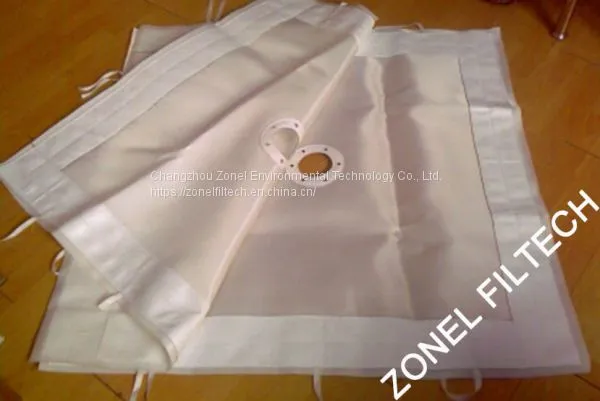
3. Air permeability of filter cloth explained
Air permeability is the volume of air passing a given cloth area in a set time, often stated in L/m2/s. Higher permeability means fluid moves freely and the press cycles faster in service. Lower permeability holds finer solids but slows the run on the floor.
Zonel Filtech uses permeability to tune a cloth to the slurry and the press speed of the line. It is the first number to check when a press runs slow during a shift. Treat it as the breath of the cloth, because flow starts and ends there in the cycle.
The table below shows a typical relationship between permeability and run behavior for similar weaves. Use it to reason about speed before you change the grade on a press. A small shift in this number moves the cycle time more than buyers expect.
| Permeability | Run speed | Cut |
|---|---|---|
| High | Fast | Coarser |
| Medium | Balanced | Mid |
| Low | Slow | Finer |
When a press lags, check permeability against the load before blaming the pump or the feed. A cloth that breathes well keeps the cycle short and the cake dry. The number predicts the run better than a visual check of the roll.
A buyer can sanity check permeability by timing a known cycle and noting the filtrate rate against a prior grade on the line. The clock is a rough instrument but it shows a big swing in flow right away. Pair that timing with the spec number and the cloth choice becomes grounded in evidence rather than hope.
4. Gram weight and thickness of the cloth
Gram weight is mass per square meter, a proxy for thickness and body of the cloth. Heavier cloth resists puncture and holds shape under load on the press plate. Lighter cloth drains faster but wears sooner in abrasive feed through a line.
Our team pairs gram weight with the solids to avoid both blowouts and slow cycles in service. A thin cloth in a coarse slurry can fail at the seams under pressure during the squeeze. The number sets the physical backbone of the media you rely on.
For a sticky ore, a mid weight with a smooth face often beats a heavy one that blinds. Weight is not a score to maximize but a value to match to the duty. The right mass keeps the cloth alive long enough to pay for itself on the floor.
5. Tensile strength and elongation
Tensile strength is the force the cloth withstands before breaking, measured in N/5cm in warp and weft. Elongation is how far it stretches under that load before it yields on the press. High elongation lets the cloth wrinkle on a press and bypass cake.
Changzhou Zonel Environmental Technology checks both directions because press tension is not equal across the cloth. A cloth strong in one axis but weak in the other still fails in service at the weak line. Read warp and weft, not a single value on the sheet.
When a cloth stretches past the plate seal, slurry slips around the cake and ruins the result. The tensile margin you buy is what holds the sheet flat under squeeze. Skimp here and the whole press underperforms no matter the fiber chosen.
Seam tensile deserves the same attention as the field of the cloth on a press. A strong sheet with a weak seam still lets slurry through at the join under load. The company tests seams on the finished panel, because the weakest point decides the life of the whole piece in service.
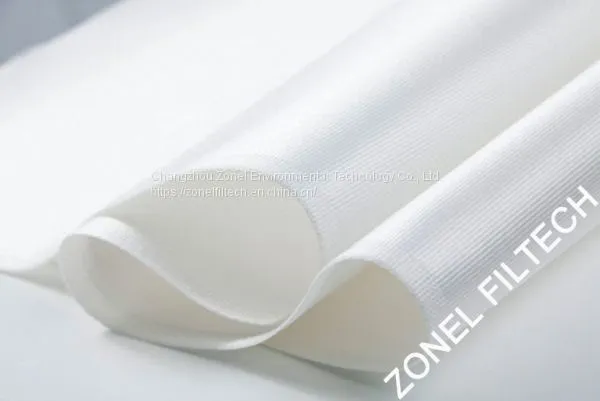
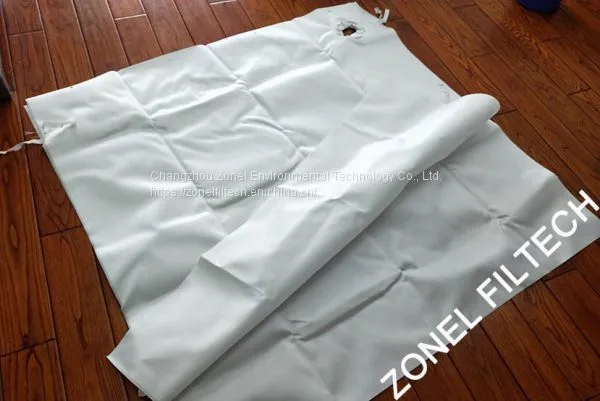
6. Pore size and micron grade
Pore size sets the cut point of the cloth, usually stated in microns for the buyer. It works with permeability, not against it, to define the working grade on a line. A fine pore with high permeability is the aim but costs more to weave in the workshop.
The company matches pore to the target solids while keeping flow acceptable for the press model. Our team treats pore size as the clarity control and permeability as the speed control in the design. Together they define what the cloth actually does on the floor during a run.
Chasing a tiny pore without permeability leads to a cloth that is clear but slow and blinds early. Chasing flow without pore control leads to a fast cloth that passes solids downstream. Balance the two and the grade serves both clarity and cycle time well.
Pore size also shifts with tension on the press, because a stretched cloth opens its structure under load in the cycle. A grade measured flat can read coarser once squeezed onto the plate. Account for that change when the duty runs at high pressure, or the cut you planned will drift during the run.
7. Cake release and surface finish
Cake release describes how cleanly the cake drops off after the squeeze on a press. A smooth surface finish releases better and cuts wash labor between sets on the line. Rough or fuzzy surfaces hold cake and blind sooner than a clean one does.
Zonel Filtech notes release as a qualitative spec because it drives operating cost more than buyers expect to see. A cloth that releases in seconds saves hours over a campaign of runs. This spec rarely appears on cheap quotes, which is exactly the point for a buyer.
The table below lists the four specs that should travel together on every quote you review. Ask for all four before you decide between two grades in the market. A missing value is a missing clue about how the cloth will behave under load.
| Spec | Why it matters |
|---|---|
| Air permeability | Cycle speed |
| Gram weight | Body and puncture |
| Tensile warp/weft | Run survival |
| Cake release | Cleaning labor |
8. How filter cloth specs are measured
Permeability uses a standard airflow rig at a fixed pressure across a clamped sample in the lab. Tensile uses a strip pulled in a tester to break, recorded in both directions of the cloth. Pore size uses bubble point or image analysis on the weave for the grade.
Changzhou Zonel Environmental Technology runs these on finished rolls, not just on lab swatches from a corner. Measuring the roll catches batch drift that a swatch hides from view on a buyer. Consistent measurement is what makes reorders repeatable for the plant over years.
A roll test also confirms the seam and the edge, not just the field of the cloth. Those edges take the most abuse on a press during the squeeze. The full-roll check is why two shipments of the same grade behave the same on the floor.
Calibration of the test rig matters as much as the test itself for repeatable numbers. A rig left unchecked drifts and reports a friendly number that the floor later contradicts. The workshop logs calibration and rechecks the airflow standard so the spec you receive matches what the cloth does in the press.
9. What Changzhou Zonel Environmental Technology documents
The company issues a spec sheet per grade with the four core values plus fiber and weave for the buyer. Our team records the batch number so a later roll can be traced to the same setting in the plant. Zonel Filtech treats the document as part of the product, not paperwork to file.
Buyers receive the numbers needed to reorder without re-testing the cloth each time. A clear spec turns a one-off buy into a stable supply line across seasons. That traceability is why plants stay on one grade for years without surprise changes in behavior.
With over 220 staff across departments, the team can keep a grade stable while the line scales up. The document travels with the roll from the workshop to the port. The buyer gets proof, not a promise, with every shipment of cloth.
A spec sheet also helps a new operator learn the cloth without a long briefing from the floor. The four numbers teach more in a glance than a paragraph of marketing text does. Hand the sheet to the line lead and the next changeout goes faster with fewer questions asked during the shift.
10. FAQ
10.1 Which spec matters most for a slow press?
Usually air permeability, because low permeability slows the cycle and raises pressure across the plate. Check it against the slurry load first when the press lags in service. Our team also reviews gram weight, since a heavy cloth can restrict flow in fine feed.
The combination, not one number, explains a slow run on a press. A cloth that is right on permeability but wrong on weight still underperforms in the cycle. Look at the set together before changing the grade you order.
10.2 What tensile is enough for a filter press?
Enough to survive the squeeze without stretching past the plate seal during the cycle. Warp and weft both matter because tension differs across the cloth on a press. Changzhou Zonel Environmental Technology matches tensile to the press model you run.
Guessing low leads to wrinkle and bypass that ruins the cake on the floor. Send the press type and the squeeze pressure so the grade fits the machine. The right tensile keeps the cloth flat under load and the cake clean behind it.
10.3 Does higher gram weight mean better cloth?
Not always, because heavier cloth resists puncture but drains slower and may blind in fine feed. The right weight follows the solids and the pressure on the press in service. The company balances weight against permeability for each duty you run.
More is not automatically better when the slurry is fine and the cycle is short. Match the weight to the load, then confirm with a sample run on site. The spec that fits the duty wins over the heaviest option on the shelf for most plants.
10.4 How do I compare two cloth quotes fairly?
Put the spec sheets side by side and compare the same four values for each grade. If one quote omits cake release or tensile, ask for it before deciding on price in the market. Zonel Filtech provides the full set on request from its workshop to the buyer.
Equal specs at a lower landed cost is the real win, not the lowest line item on the page. Landing cost includes cutting, seaming, and testing after the raw roll. Compare the finished cloth, not the raw meter, and the better deal appears clearly.
Recently Posted
-
Understanding Filter Bag Standards: ISO, ASTM, and Industry Norms
September 1, 20261. The shipment that failed an auditA buyer a few years ago received a bag shipment that looked correct but failed an audit at the Read More
 -
Dust Collector Filter Bags in Cement Plants: Field Experience
August 31, 20261. The reading that crept past its limitA cement finish mill some time ago fought a rising stack reading that crept past its limit Read More
 -
Filter Cloth Selection Guide: 6 Factors Buyers Often Miss
August 28, 20261. The cloth that failed a spec but passed a quoteA buyer a while back approved a filter cloth because the quote looked right and Read More
 -
Nylon vs PTFE Filter Bags: Chemical Resistance Compared
August 27, 20261. The acid leak that traced back to a bagA plating line some time ago switched bags to cut cost and within weeks the housing leak Read More

Contact Us
Recommended Products
-
 Woven Filter Fabrics / Filter Cloth / Filter Press ClothNegotiableMOQ: 100 Meters
 -
Pulse Jet Bag Filter Housing and Filter Housing AccessoriesUS$ 500 - 2000MOQ: 1 Piece
-
Candle Filters/ Candle Filter SystemNegotiableMOQ: 1 Set
-
Oblique Installing Cartridge Dust Collector/Cartridge Dust Collectors/ Dust Filter Cartridge FiltersUS$ 500 - 2000MOQ: 1 Set
-
Polyamide (PA)/Nylon Bolting Cloth / Mesh for Printing and General Filtration/ Filter MeshNegotiableMOQ: 100 Meters

-
Air Slide Hose/ Air Slide Hose for Cement Trailer/ Air Slide Hose for Cement SiloUS$ 1 - 3MOQ: 1 Meter
-
Polyester Needle Felt and Filter Bags for Dust Collector SystemsUS$ 1 - 2MOQ: 1 Piece
-
Anti-static Needle Felt Filter Cloth and Filter BagUS$ 1 - 2MOQ: 1 Piece
-
Filter Press Belt/ Vacuum Filter Belt/ Forming BeltUS$ 5 - 25MOQ: 1 Piece
-
PP Woven Filter Cloth for Filter PressUS$ 1 - 15MOQ: 1 Piece
-
PET Woven Filter Cloth for Filter PressUS$ 1 - 15MOQ: 1 Piece
-
The Filter Belt for Phosphoric Acid Filtration With Wet ProcessingUS$ 10 - 30MOQ: 1 Piece
-
SS Bag Filter Housing – Single Bag Side EntranceNegotiableMOQ: 100 Pieces
-
Vertical Installing Cartridge Dust Collector/Cartridge Dust Collectors/ Dust Filter Cartridge FiltersUS$ 500 - 2000MOQ: 1 Set
-
High Flow Cartridge Filter Housing-HFC SeriesNegotiableMOQ: 1 Set
-
SS Cartridge Filter HousingNegotiableMOQ: 1 Set
-
S.S. Multi-Bag Filter HousingNegotiableMOQ: 100 Pieces
-
Aramid / Nomex Needle Felt Filter Cloth for Dust Filter Bags Sewing; Nomex Dust Filter BagsUS$ 5 - 8MOQ: 1 Piece
-
Para-Aramid Filter Fabric / Kevlar Filter Cloth And Filter BagsNegotiableMOQ: 100 Meters
-
Polyester Air Slide Fabric, Polyster Air Slide Belt, Polyester Air Slide Membrane, Polyester Air Slide ClothUS$ 10 - 20MOQ: 1 Meter